SpaceX has acquired nationwide licenses for up to 14 MHz of paired low-band spectrum in the 800 MHz frequency range.
What the deal actually adds
- SpaceX agreed to buy a nationwide portfolio of 800 MHz licenses from Grain Management, up to 14 MHz of paired low-band spectrum. The Wall Street Journal put the price at about $8 billion in cash.
- The deal still needs FCC approval.
- SpaceX says its 2 GHz mid-band spectrum supplies capacity, while the 800 MHz band adds a layer that reaches phones inside buildings.
What SpaceX already has
- The active constellation is about 10,200 satellites, including 9,600 broadband units.
- SpaceX already helps T-Mobile fill cellular dead zones. T-Mobile still handles the subscription, billing, and customer support.
- The FCC approved a 15,000-satellite constellation for Starlink Mobile. Second-generation satellites start flying in 2027, with service going live at the end of 2027.
- Starlink subscribers doubled to 12 million.
The gaps
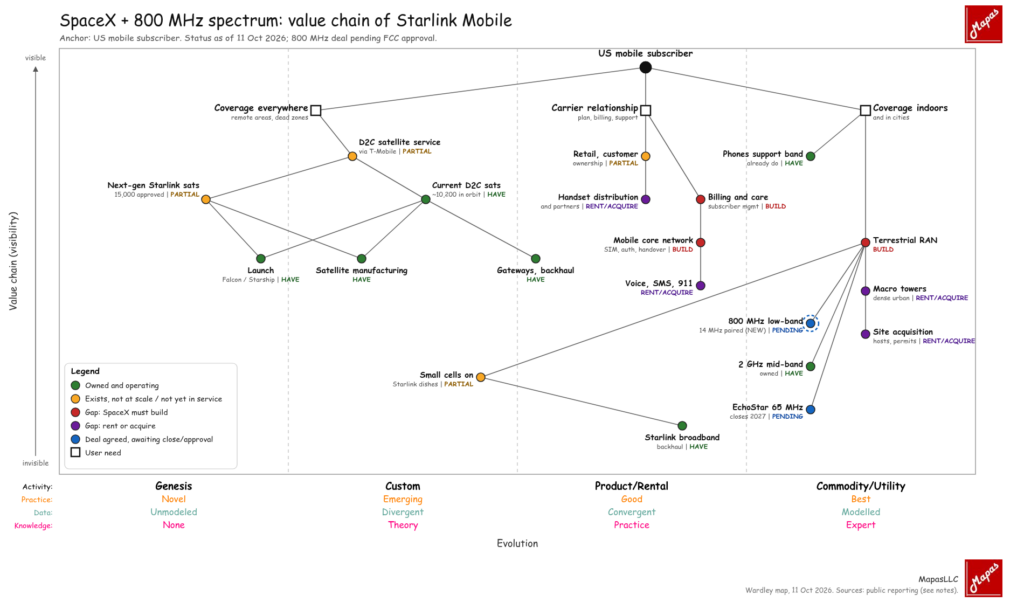
- Ground network (biggest gap): SpaceX’s plan is to place small cellular radios alongside existing Starlink dishes rather than build new macro towers. That is a build/own approach. Analysts note 14 MHz is a modest slice, and reliable high-capacity service in dense cities would still require terrestrial towers. That leaves a rent-or-acquire question for dense-urban sites.
- Carrier operations: A Starlink-branded service would give SpaceX control of the customer relationship, which means it must build or rent billing, care, and the core network. I found no public source describing these, so I flagged them as inferences.
- Satellites on 800 MHz: The new satellites are built around 2 GHz, so I treated 800 MHz as primarily a terrestrial indoor layer. Whether satellites will also use it isn’t stated in the sources I found.
The map: they still have to build/buy many capabilities
All this is not going to happen overnight, and this direction is not new.
Here the map of capabilities that they have and they should have.
So now what?
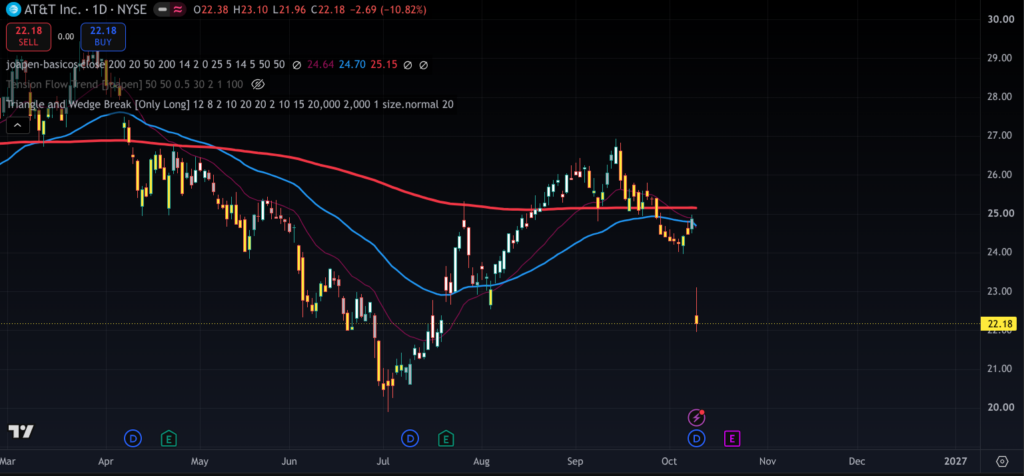
I do not know the reaction of the market on AT&T (-10%) and VZ (-10% too).
This is gold for swing traders that understand the difference between the news and the facts happening over the time.
 WordPress
 Google +
  Facebook