I have been trying to understand the differences between Paxos and Circle. Tether continues being the leader, but in the space of stablecoins issuers under the regulations of countries, Circle and Paxos seem to be 2 of the main players.
Where is Paxos competing?
Paxos operates with heavy regulatory compliance (NYDFS-supervised trust status, OCC national trust bank charter, MAS/MiCA licenses). Paxos issues tokens on behalf of enterprise partners—most notably PayPal USD (PYUSD) and the Global Dollar Network (USDG)—acting as a backend issuer rather than a consumer-facing brand.
They are trying to attract similar clients than Circle.
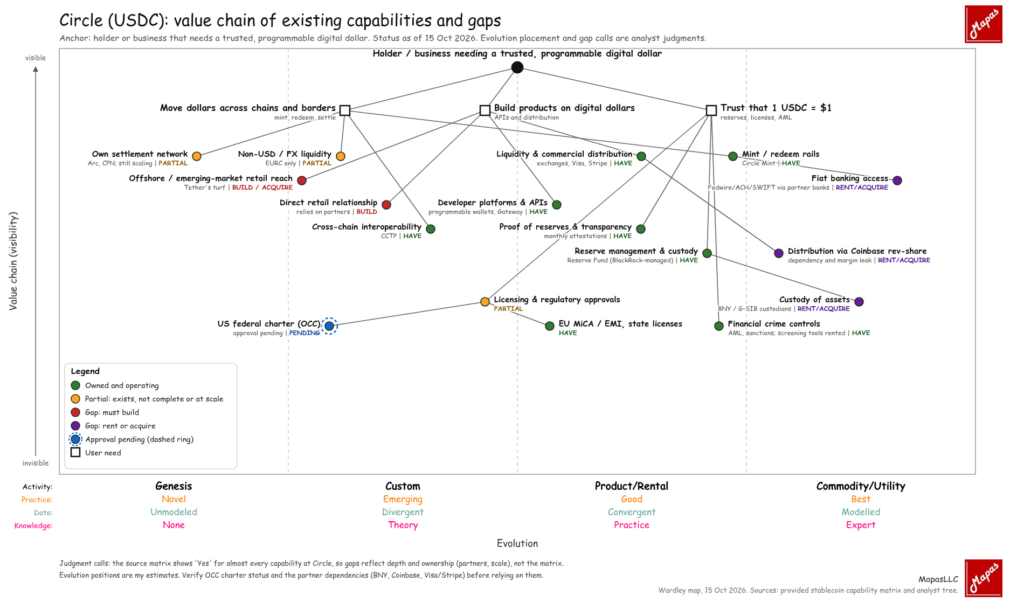
Circle Map
A map to follow-up in the future.
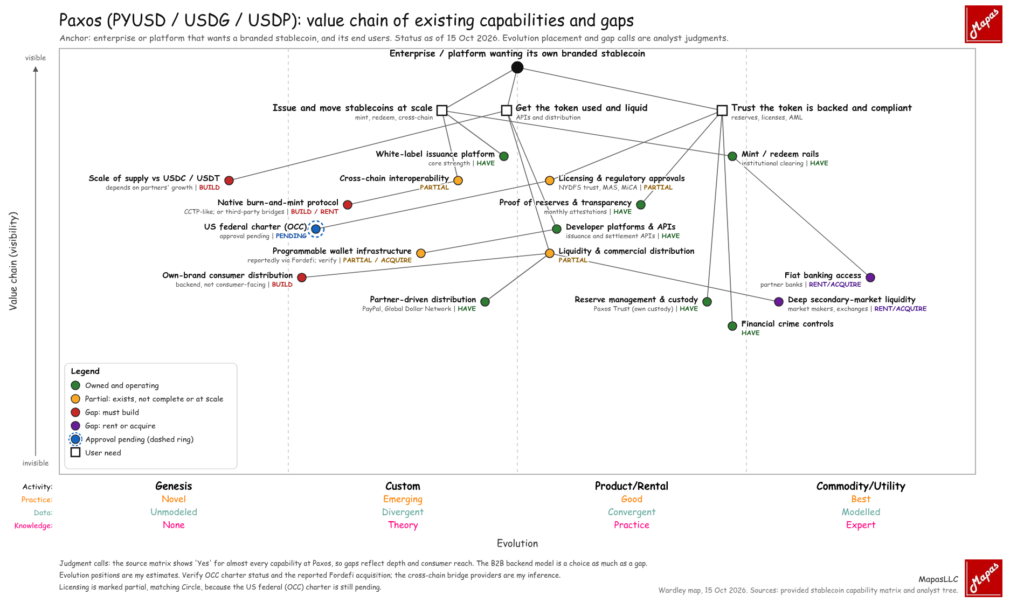
Paxos Map
A map to follow-up in the future.
Takeaways
- Circle’s real gaps are dependency risks (Coinbase distribution, banking and custody partners) and the missing direct retail and emerging-market presence. Its compliance stack is the most complete of the group.
- Paxos’s real gaps are in scale and consumer reach. Its business model is the B2B backend, so lacking a consumer brand is a strategic choice as much as a gap.
- OCC charters: I marked these yellow for both.
- Cross-chain at Paxos I’m not certain which bridge providers it uses.
- Market Value Circle is right now $3.5B, and the only data about Paxos (that is not public) is that is valued for $2.8B.
 WordPress
 Google +
  Facebook